Monpazier’s defensive story is best told through what survives and what the records actually protect: fortified gates at the northern approaches, a gate at the southern end of Rue Saint-Jacques, and a tower associated with the eastern rampart.
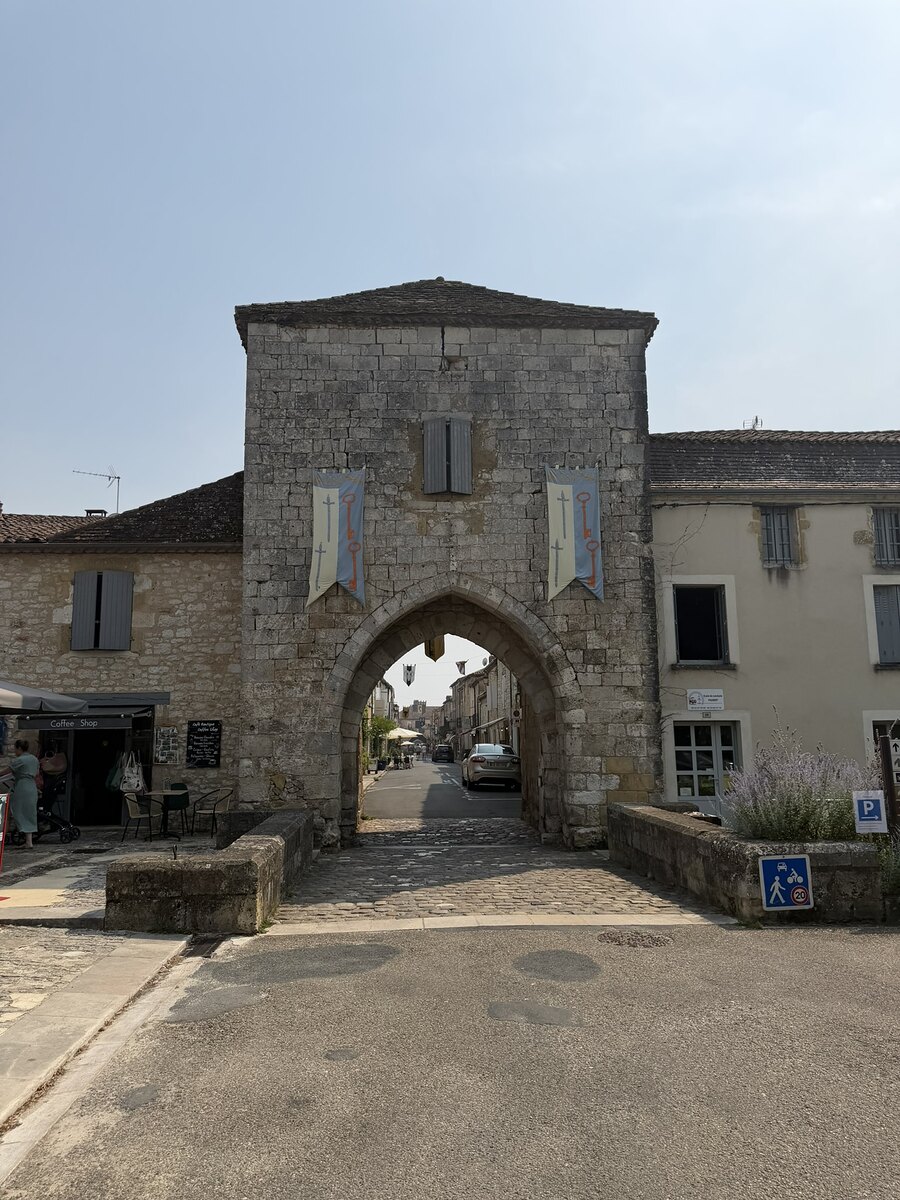
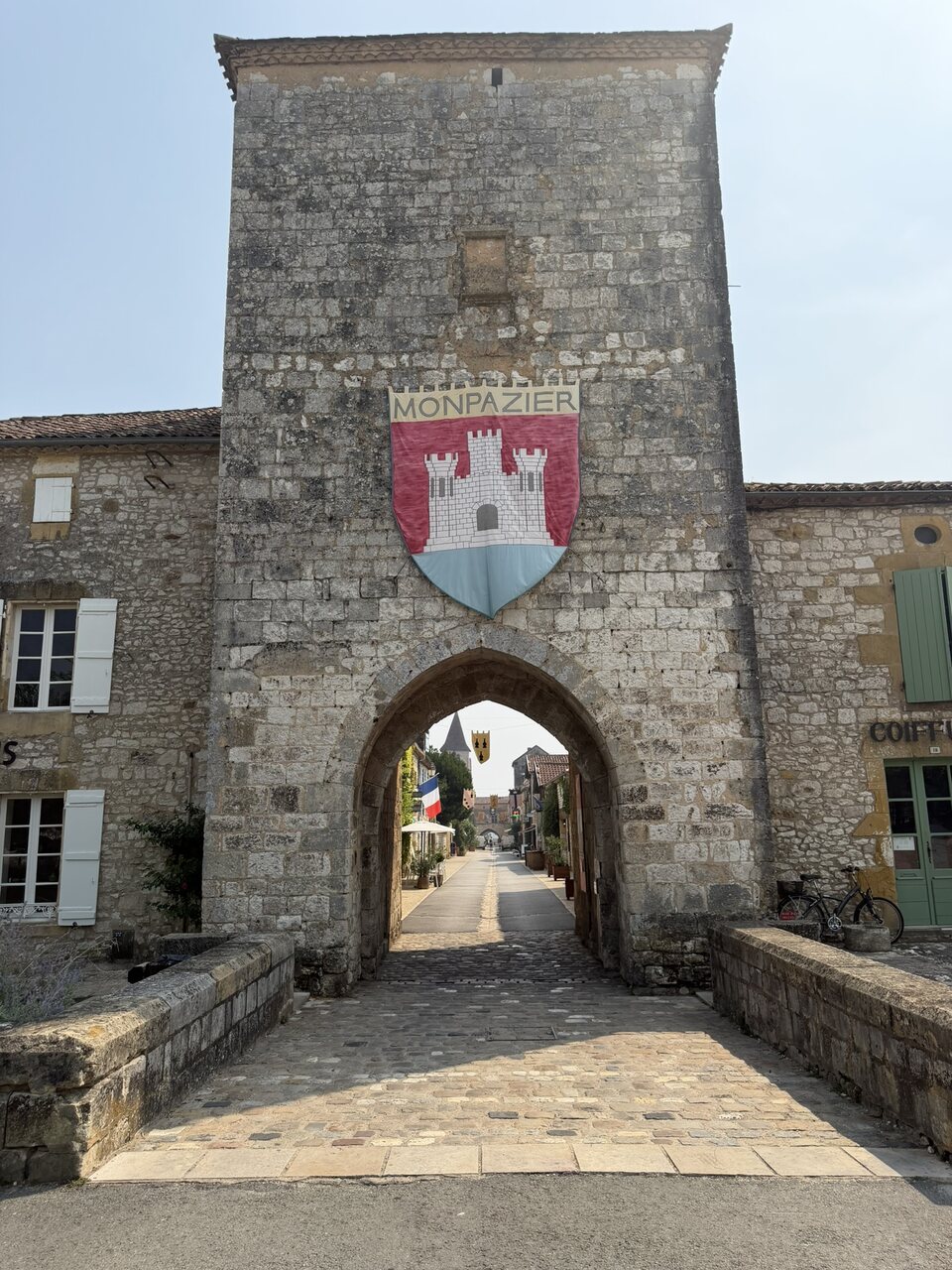
The northern gates
Two Ministry of Culture records identify gates north of the town. PA00082680 places one at the north end of Rue Saint-Jacques. PA00082681 places another north of the town, opposite Rue Notre-Dame. Both are recorded as thirteenth-century construction campaigns and were registered as Monuments Historiques on 16 October 1936.
The records identify private ownership. Visitors can understand the structures from lawful public viewpoints without assuming access beyond the street or passage.
PA00082680 · north end of Rue Saint-Jacques
PA00082681 · opposite Rue Notre-Dame
The southern Saint-Jacques gate
POP record PA00082679 identifies a fortified town gate south of Rue Saint-Jacques. The record attributes its principal construction campaign to the thirteenth century and records its registration as a Monument Historique on 16 October 1936. Like the two northern gates, it is private property; the legal record does not itself promise public interior access.
Its position south of Rue Saint-Jacques makes it the southern counterpart to the registered gate at the street’s northern end.
The eastern rampart tower
The eastern-rampart record PA00082682 concerns partial protection of a tower on former cadastral parcel A 266. The tower—not every surviving stretch of wall—was registered on 5 October 1961. The record describes the property as private and gives no construction century; its appearance alone cannot supply a secure date.
What “surviving defences” means
A bastide can retain a clear planned form even when much of its enceinte has changed or disappeared. Gates preserve controlled points of passage; a tower preserves one defensive element; street alignments help explain how approaches met the town.
The regional inventory reports that by the eighteenth century the consuls were authorising demolition of the enclosure and leasing or alienating former communal spaces such as lanes and ditches. The present fragmentary state is therefore part of a longer history of civic change, not evidence that the medieval town lacked an enclosure.
Local tradition also attaches names and stories to gates. The Porte du Paradis legend now has its own story-and-evidence account: the tradition is preserved, while the alleged one-year rule and the opening’s original function remain unproven.
The self-guided heritage walk connects the verified northern gates with the square, church and principal streets. The route concentrates on features that can be followed confidently from public streets.
What to notice
- The alignment of each gate with a principal street.
- The two faces of a gateway and the form of its passage.
- Clearly visible grooves, hinges or openings, while avoiding assumptions about damaged or altered features.
- The relationship between the eastern tower and adjoining wall.
- The difference between a building’s medieval campaign and its twentieth-century protection.