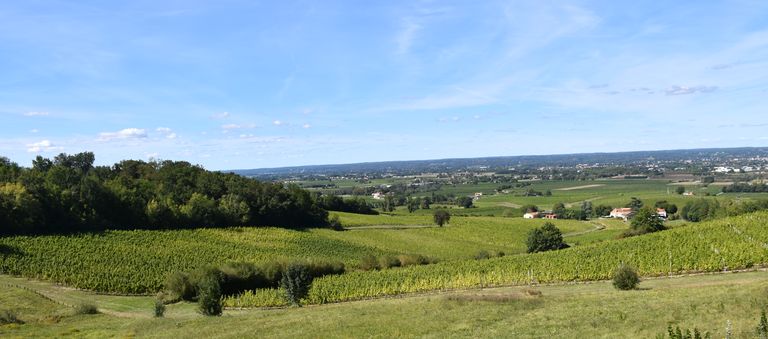
Bergerac, Pécharmant, Rosette, Montravel, Monbazillac, Saussignac and Duras form the main geographic reference points.
Maison Sérénité Local Guide · Bergerac & Dordogne Wine Country
A practical guide to Bergerac wines and the wider Dordogne wine country — designed to help you recognise the styles, grapes and appellations you are most likely to encounter and choose a bottle with confidence.
Bergerac wine country becomes much easier to understand once you stop worrying about complicated French labels and begin with a simpler question: what kind of wine do you actually enjoy?
During a stay in the Dordogne you can encounter crisp dry whites, refreshing rosés, approachable fruit-driven reds, deeper structured reds, gently sweet whites and the rich golden wines for which Monbazillac is particularly famous.
The names on the bottle may initially look unfamiliar, but the grapes are often much more recognisable. Merlot, Cabernet Sauvignon, Cabernet Franc and Malbec are central to many of the region's red wines, while Sauvignon, Sémillon and Muscadelle form the backbone of many whites.
This guide is deliberately practical rather than encyclopaedic. We will help you understand what the wines taste like, which grapes matter, how appellations differ, how to read a French wine label and what to pair with them.
Bergerac, Pécharmant, Rosette, Montravel, Monbazillac, Saussignac and Duras form the main geographic reference points.
Red, rosé, dry white, sweet white and richer concentrated sweet wines.
Merlot, Cabernet Sauvignon, Cabernet Franc and Malbec.
Sauvignon, Sémillon and Muscadelle are the three names worth learning first.
Monbazillac is the region's best-known sweet white wine and one of its most distinctive visitor experiences.
Pécharmant is produced on the hills around Bergerac and is known for more structured, characterful red wines.
Choose what you want to discover
Jump straight to the part of the guide that interests you, or continue down the page to explore Bergerac wine country in order.
A useful geography note: Bergerac, Monbazillac, Pécharmant, Rosette, Saussignac and Montravel are in the Dordogne. Côtes de Duras forms part of the wider Bergerac & Duras wine family but lies just across the departmental border in neighbouring Lot-et-Garonne.
Want to experience the wines rather than only read about them?
Use our separate vineyard guide to plan a wine-tasting day from Monpazier. Compare Monbazillac estates, Pécharmant, guided Bergerac wine tours, Quai Cyrano, Côtes de Duras and our relaxed full-day itinerary.Start with what you already enjoy
Forget memorising appellations for the moment. Start with the kind of wine you normally enjoy, then discover which Bergerac and Duras names are most likely to suit your taste.
Bergerac wine country is unusually diverse. Within the same wider region you can move from a crisp Sauvignon-led dry white to an easy-drinking rosé, a supple red, a structured Pécharmant or a concentrated golden Monbazillac.
The easiest way into that diversity is therefore taste first, appellation second. Choose the description below that sounds most like you and jump directly to the part of this guide that explains what to look for on the bottle.
Start with Bergerac Sec or Montravel Sec.
Try Bergerac Rouge first, then move towards Pécharmant if you want more structure.
Monbazillac is the obvious local place to begin.
You will see these words repeatedly on tasting lists and wine descriptions around Bergerac.
A dry wine rather than a sweet one. On this page you will encounter it particularly with white wines such as Bergerac Sec.
A sweet white style with a softer, rounded impression, but generally less concentrated than the richest liquoreux wines.
The richer sweet-wine category associated locally with appellations such as Monbazillac, Saussignac and Haut-Montravel.
One wine region · very different bottles
Now that you know your preferred style, the appellation names become much easier. Two vineyards only a few kilometres apart can produce dramatically different wines. Continue into the guide to see how Bergerac, Pécharmant, Rosette, Monbazillac, Saussignac, Montravel and Côtes de Duras fit together.From crisp & dry to rich & golden
Bergerac wine country stretches across remarkably different styles. Follow the spectrum from fresh dry whites through rosé and red wines to the concentrated golden sweet wines of Monbazillac and its neighbours.
Fresh, aromatic whites with citrus, orchard fruit and lively acidity.
Look for Bergerac Sec · Montravel SecBright, refreshing wines made for warm afternoons, relaxed lunches and summer food.
Look for Bergerac Rosé · Côtes de Duras RoséRed and dark fruit with a softer, more immediately approachable character.
Look for Bergerac RougeDeeper fruit, tannin and greater ageing potential for visitors who enjoy more serious reds.
Look for Pécharmant · Côtes de Bergerac RougeFloral, rounded white wines where sweetness is balanced by freshness.
Look for Rosette · Côtes de MontravelConcentrated sweet whites with honeyed fruit, complexity and impressive ageing potential.
Look for Monbazillac · Saussignac · Haut-MontravelDry whites and rosés are the natural starting point if freshness and easy drinking matter most.
Bergerac Rouge is generally the softer starting point; Pécharmant takes you towards greater structure and depth.
The spectrum progresses from softer sweet whites towards the richer golden wines for which Monbazillac is famous.
Found a style that sounds like you?
Now discover the grapes and appellations behind the bottle. Continue through the guide for the main Bergerac grape varieties, individual appellations and practical advice for reading a French wine label.Seven names unlock most of the region
You do not need to memorise every permitted variety. Four principal red grapes and three principal white grapes explain most of the Bergerac wines a visitor is likely to encounter.
Bergerac wines are commonly built from blends rather than asking a single grape variety to provide every characteristic. One variety can bring fruit, another freshness, another structure and another perfume.
Understanding the grapes therefore becomes much easier when you think about the job each one performs in the wine rather than trying to memorise long lists of technical facts.
Red berries, dark fruit, citrus, orchard fruit and more.
Acidity and lift help prevent a wine from feeling heavy.
Tannin, body and depth influence how a red wine develops.
Floral, herbal, spicy and perfumed notes add complexity.
These four varieties recur across Bergerac Rouge, Côtes de Bergerac Rouge, Montravel Rouge, Pécharmant and the red wines of Côtes de Duras.
Merlot is the most widespread grape in the Bergerac vineyard. It brings colour, softness and fleshy red-fruit character, helping many local reds feel generous and approachable.
Look for: black cherry · strawberry · raspberry · redcurrant · plumCabernet Sauvignon contributes structure, body and a deeper colour. It is especially useful where a winemaker wants a red with more backbone and the potential to develop with age.
Look for: blackcurrant · cassis · cedar · liquorice · tobaccoCabernet Franc can bring freshness, finesse and aromatic complexity to a blend, adding lift alongside the roundness of Merlot or the structure of Cabernet Sauvignon.
Look for: strawberry · redcurrant · violet · liquorice · green pepperMalbec — also historically known by names including Côt — contributes intense colour, dark fruit and personality. It is particularly rewarding to recognise in Pécharmant and other Bergerac red blends.
Look for: cherry · blackberry · blueberry · plum · liquoriceSauvignon, Sémillon and Muscadelle form the core white-wine family behind many of the region's dry, gently sweet and richly sweet wines.
Sauvignon is especially important in dry Bergerac whites. It contributes freshness and expressive fruit and floral aromas, often giving the wine its brightest character.
Look for: citrus · white flowers · peach · tropical fruitSémillon brings body and complexity. It is also particularly important in the region's sweet wines because it responds well to the conditions that can encourage noble rot.
Look for: pear · acacia · hazelnut · dried fruit · honeyMuscadelle is highly aromatic and generally plays a supporting role in the blend, adding fragrance and finesse to both dry and sweet Bergerac whites.
Look for: honeysuckle · acacia · orange zest · floral perfumeCurious wine lovers may encounter additional traditional or permitted varieties, particularly once the guide moves beyond the core Bergerac appellations. They are interesting, but you do not need to memorise them to understand the region.
Also known locally as Périgord, this historic Bergerac variety has been reintroduced as a secondary grape and can contribute bright red-fruit character.
One of the additional white varieties permitted in Côtes de Duras, valued for the freshness that naturally high acidity can bring.
Another permitted Côtes de Duras white variety, adding further diversity to the wider Bergerac & Duras wine family.
Individual appellations have their own permitted varieties and blending rules. This is a visitor's guide to the grapes most useful for understanding what you are likely to encounter, not a technical specification for every appellation.
This is enough to make many Bergerac tasting lists and wine descriptions immediately easier to understand.
You know the grapes — now put them into context
Next, see how the appellations turn these varieties into very different wines. Bergerac, Côtes de Bergerac, Pécharmant, Monbazillac, Rosette, Saussignac, Montravel and Duras each use these grape varieties in different ways.The foundation of the Bergerac wine guide
The name Bergerac covers more than one style. Learn these five core wines first and the specialist appellations of Monbazillac, Pécharmant, Rosette and Montravel become much easier to understand.
The regional Bergerac terroir gives visitors an unusually useful starting point: three Bergerac wines — dry white, rosé and red — alongside two Côtes de Bergerac wines: a more structured red and a sweet white.
Rather than trying to memorise every appellation at once, understand these five expressions first. They provide the framework into which much of the rest of Bergerac wine country fits.
If you normally reach for a fresh Sauvignon-based white, this is one of the easiest Bergerac wines to understand. Sauvignon contributes brightness and aromatic freshness, while Sémillon adds body and Muscadelle perfume.
Styles vary from distinctly citrus-led to softer, fruitier and more floral expressions, but freshness remains the useful theme to remember.
Citrus, white flowers, fresh fruit and lively acidity.
Sauvignon, Sémillon and Muscadelle.
Drinkers who enjoy fresh, aromatic dry whites.
Goat's cheese, salads, vegetables, lighter dishes or an aperitif.
Bergerac Rosé draws on the same red-grape family used for local reds: Merlot, Cabernet Sauvignon, Cabernet Franc and Malbec.
Do not judge it purely by colour. Some examples are pale and delicate while others show deeper colour and more obvious red-fruit character.
Freshness, red berries and an easy-drinking character.
Merlot, Cabernet Sauvignon, Cabernet Franc and Malbec.
Warm-weather lunches, terraces and relaxed summer drinking.
Charcuterie, salads, vegetables, poultry or picnic food.
Bergerac Rouge combines the region's principal red varieties into wines where fruit and supple tannins generally make the style accessible while still young.
This is often the easiest local red to begin with if you want something that can accompany an informal meal without demanding years of bottle age.
Red berries, plum, freshness and a supple texture.
Merlot, Cabernet Sauvignon, Cabernet Franc and Malbec.
Drinkers who favour accessible, fruit-led reds.
Charcuterie, poultry, duck, mushrooms or bistro dishes.
The grape family may be familiar from Bergerac Rouge, but the expression is different. Côtes de Bergerac Rouge is associated with greater concentration, structure and capacity to develop with age.
Alongside ripe fruit, more developed examples can move towards spice, pepper, tobacco, leather and other savoury notes.
Darker fruit, spice, more structure and a longer finish.
Merlot, Cabernet Sauvignon, Cabernet Franc and Malbec.
Drinkers who enjoy fuller reds or want a wine with ageing potential.
Duck, beef, game, mushrooms, slow-cooked dishes or mature cheese.
Not every sweet white from Bergerac is as concentrated as Monbazillac. Côtes de Bergerac Blanc can provide a gentler introduction to the region's sweeter styles.
The wines commonly show ripe yellow-fruit and floral character, with sweetness balanced by enough freshness to keep the wine from feeling simply sugary.
Yellow fruit, white flowers, softness and freshness.
Sauvignon, Sémillon and Muscadelle.
Drinkers who enjoy sweetness without necessarily wanting a rich liquoreux wine.
Blue cheese, pâté, gently spiced food, fruit dishes or an aperitif.
When you want something fruitier, more supple and immediately approachable with a relaxed meal.
When you want more depth, structure and greater potential for complexity with age.
Ready to go beyond the regional starting points?
Next come the specialist appellations that give Bergerac wine country its personality. Discover golden Monbazillac, structured Pécharmant, delicate Rosette, Saussignac and the distinctive wines of the Montravel terroir.The golden wine of Bergerac
Monbazillac is one of the best-known names in Bergerac wine country. It is a rich sweet white wine, but its character is about far more than sweetness: concentration, fruit, aroma and freshness all need to work together in the glass.
The appellation lies south of Bergerac on the left bank of the Dordogne. Vineyards rise from the river terraces towards north-facing slopes and small plateaux overlooking the valley.
Monbazillac has held AOC status since 1936. Its three principal grapes are Sauvignon, Sémillon and Muscadelle — familiar names elsewhere in Bergerac, but here they are used to create something dramatically richer.
The useful question is therefore not simply “Why is it sweet?” but how the vineyard, weather, harvest and fermentation combine to create sweetness without losing balance.
The sweetness starts with naturally concentrated grapes. Monbazillac is not simply a dry wine to which sweetness is added afterwards. Ripeness, weather, selective harvesting and fermentation all influence the finished wine.
Fruit remains on the vine long enough to achieve high ripeness and concentration.
Dew, mist or fog in the morning followed by sunnier afternoons can create favourable conditions for further concentration and noble rot.
Harvesters return through the vineyard, selecting suitable fruit by hand rather than clearing every vine in a single pass.
Fermentation converts part of the grape sugar into alcohol while enough natural sugar remains to give the finished wine its sweetness.
The same core white varieties used elsewhere in Bergerac take on a much richer personality when ripeness, concentration and selective harvesting change the balance.
Important for body, texture and complexity, and particularly well suited to the conditions associated with noble rot.
Helps provide aromatic lift and freshness, an important counterweight to the wine's natural sweetness.
Adds floral and perfumed character, bringing another aromatic layer to the blend.
Compare these varieties with their roles elsewhere in our guide to Bergerac grape varieties or see how they can also create crisp Bergerac dry white wine .
Individual producers and vintages differ, but official regional descriptions provide a useful flavour picture.
Younger wines are characteristically golden and can show honey, candied citrus, acacia, apricot, fig, mirabelle plum, peach and gingerbread. With age, the colour can deepen towards amber and the flavours become more evolved.
Most visitors will encounter classic Monbazillac first. Occasionally, however, a bottle may carry the words Sélection de Grains Nobles.
Already gives you the essential character of the appellation: golden sweet wine, concentrated fruit and freshness.
Official regional guidance places classic Monbazillac in the first range of liquoreux sweetness and recommends it both as an aperitif and during a meal.
A more concentrated expression made from highly selected fruit. Official regional guidance describes it as exceeding 85 g/l of sugar.
Expect still greater richness and concentration, with characteristic references to candied fruit and orange peel.
The regional wine body recommends Monbazillac with both savoury and sweet dishes. Its sweetness can work particularly well when contrasted with salty, rich or strongly flavoured food.
Perhaps the best-known local combination and an easy way to understand the sweet-and-savoury contrast.
Try strongly flavoured cheese, poultry with fruit or chestnuts, walnuts and dishes incorporating Périgord truffle.
Orange, caramelised fruit, Périgord walnuts, chestnuts and chocolate all appear in regional pairing ideas.
Later in this guide you can compare these ideas with our complete Bergerac wine and food-pairing guide .
Yes. Good Monbazillac can develop over many years. Its combination of sweetness, concentration and freshness provides significant ageing potential.
As the wine matures, its bright golden colour can deepen towards amber while fresh fruit evolves towards more honeyed, dried-fruit and candied characteristics.
One extraordinary historical discovery demonstrates just how resilient Monbazillac can be under exceptional storage conditions.
Now taste the appellation where it is made
Plan a Monbazillac vineyard visit from Maison Sérénité. Our separate wine-tasting guide compares Château de Monbazillac, smaller estates, practical visitor information and ways to combine Monbazillac with Bergerac.The structured red of Bergerac's northern hills
If Monbazillac is Bergerac's famous golden wine, Pécharmant is its specialist red: dark, structured and capable of becoming increasingly elegant and complex with age.
Pécharmant produces red wine only. The appellation was officially recognised in 1946 and its production area is confined to four communes: Bergerac, Creysse, Lembras and Saint-Sauveur.
Its vineyards occupy a succession of hills north and north-east of Bergerac, on the right bank of the Dordogne. The combination of hillside sites, distinctive soils and four traditional red grape varieties gives Pécharmant an identity separate from the broader Bergerac appellation.
For visitors, the simplest way to think about it is: Pécharmant takes you towards the deeper, more structured and age-worthy end of Bergerac red wine.
You do not need to become a geologist to understand Pécharmant. Four simple ideas explain why its terroir is so often mentioned when people describe the appellation.
The vineyard occupies a succession of hills north and north-east of Bergerac on the right bank of the Dordogne.
The regional wine body highlights the characteristic “Périgord sand and gravel” associated with the appellation.
INAO describes soils rich in flint with a deeper clay layer traditionally known locally as tran.
The finished wines are associated with generous structure, tannin and an ability to become more elegant with age.
The same four principal red varieties appear elsewhere in Bergerac, but the Pécharmant rules deliberately preserve the importance of blending.
Helps provide generous fruit, texture and a softer, rounder element within the blend.
Contributes backbone, depth and structure, particularly useful in wines intended to develop with age.
Can add aromatic lift, freshness and finesse alongside the deeper components of the blend.
Contributes colour, darker fruit character and another layer of personality and spice.
Want to understand what each grape contributes? Return to our guide to the principal Bergerac grape varieties .
INAO describes Pécharmant as having a dark, dense colour, with red-fruit aromas including raspberry and redcurrant together with plum-like notes.
The regional wine body also emphasises darker fruit, particularly blackberry and blackcurrant. Where wine is matured in oak, vanilla, toasted and spicy characteristics can also appear.
When you want a fruit-led, supple local red that is generally approachable relatively young.
Compare Bergerac RougeWhen you want a darker, more tannic and structured red with greater potential to evolve with time.
Explore Pécharmant CharacterPécharmant is one of the Bergerac wines most strongly associated with ageing potential, but that does not mean every bottle needs to be stored for years before it can be enjoyed.
Producer, vintage, blend and winemaking all matter. Some bottles are deliberately approachable earlier, while others benefit from additional time for their tannins and aromas to develop.
Pécharmant's structure makes it particularly comfortable with richer savoury food. Local Périgord ingredients provide some of the most interesting directions.
Duck, beef, capon and other substantial dishes can stand comfortably beside a structured red.
Earthy, savoury flavours are a natural direction, particularly as the wine develops more complexity.
A straightforward way to enjoy a bottle slowly at the table, especially with local walnuts or a strongly flavoured cheese.
For more ideas, continue to our Bergerac wine and food-pairing guide .
Official recognition came in the twentieth century, but INAO's history of the area reaches much further back.
Oenologist André Jullien cited several crus now associated with the Pécharmant area among first-class wines, including Pécharmant itself.
The Pécharmant appellation was officially recognised as an Appellation d'Origine Contrôlée in 1946.
INAO traces the historic local name through Puycharman and Pech-charman, appropriately reflecting the vineyard's position on the hills above Bergerac.
Taste Pécharmant where it is made
Visit a Pécharmant producer during your Bergerac wine day. Our separate wine-tasting guide includes a recommended Pécharmant estate, practical visitor information and an easy way to combine Pécharmant with Monbazillac and Bergerac.Beyond Monbazillac and Pécharmant
Rosette, Saussignac, Montravel and neighbouring Côtes de Duras reveal how much variety is hidden behind the better-known names of Bergerac wine country.
You do not need to memorise another long list of French appellations. The useful skill is simply being able to recognise what kind of wine a name is likely to represent when you see it on a wine list, tasting sheet or bottle.
These smaller appellations take you from the delicate sweetness of Rosette through rich Saussignac, four remarkably different Montravel styles and finally across the departmental border into the versatile vineyards of Duras.
Rosette lies north-west of Bergerac on the right bank of the Dordogne. It is one of the region's smallest and least familiar appellations, which makes finding a bottle feel like a genuine local discovery.
Sauvignon, Sémillon and Muscadelle produce a lightly sweet, moelleux white whose identity is built around freshness rather than concentration. Official descriptions emphasise subtle white flowers, fruit and a balance between sweetness and liveliness.
Rosette has held AOC status since 1946. After almost disappearing, production was revived during the 1960s — another reason this small appellation is worth knowing.
South-west of Bergerac, Saussignac continues the region's great sweet-wine story across four communes: Gageac-et-Rouillac, Monestier, Razac-de-Saussignac and Saussignac.
Sauvignon, Sémillon and Muscadelle form the core, with Chenin among the additional permitted varieties.
Grapes are picked by hand in successive passes once they have reached a high degree of concentration.
Concentration may result from botrytis or from natural concentration of the fruit on the vine.
Look for honey, flowers, citrus, candied fruit, quince and apricot with acidity balancing the sweetness.
Montravel lies west of Bergerac towards the Bordeaux border. It is the part of this guide most worth understanding before reading the label, because Montravel, Côtes de Montravel and Haut-Montravel do not all mean the same style.
Fresh, aromatic dry white with distinctive mineral character.
Dense, elegant red designed with ageing in mind.
Sweet white where softness remains balanced by freshness.
Concentrated sweet wine from selectively harvested fruit.
Sauvignon, Sémillon and Muscadelle produce dry whites noted for freshness, aromatic intensity and a distinctive mineral character.
Wines may be matured in vat or barrel, with more ambitious cuvées gaining additional richness, density and complexity.
Merlot is particularly important alongside Cabernet Sauvignon, Cabernet Franc and Malbec. The regional specification requires at least 15 months of ageing.
Expect blackcurrant, spice, undergrowth and leather, a long finish and the ability to develop in bottle.
Made from over-ripe white grapes, these wines are generally moelleux and combine fruit and softness with enough freshness to remain lively.
Peach and apricot are characteristic references, with dried-fruit, wax or honeyed notes possible in sweeter examples.
Haut-Montravel moves into the liquoreux category. Noble-rotted grapes are harvested in successive selections and enrichment is prohibited.
Gingerbread, fruit and candied citrus peel are among the characteristic official tasting references.
Côtes de Duras lies west of Bergerac in Lot-et-Garonne. It is therefore not geographically within the Dordogne département, but it belongs to the wider Bergerac & Duras wine family and makes a logical extension to a wine holiday based around Monpazier.
Merlot, Cabernet Sauvignon, Cabernet Franc and Malbec produce structured reds with plenty of personality.
Refreshing, elegant rosés designed around fruit, freshness and easy enjoyment.
Sauvignon, Sémillon and Muscadelle can create either very fresh, fruity whites or fuller and more complex styles.
Sauvignon, Sémillon and Muscadelle are joined by varieties including Chenin and Mauzac, producing wines where sweetness remains balanced by vivacity.
If you want to experience Duras rather than simply recognise the name on a bottle, our separate visitor guide includes the Maison des Vins de Duras and ideas for combining wine with the historic town and Château de Duras.
Plan a Côtes de Duras Wine VisitYou do not need the technical details in your head. This simple style guide is enough when choosing from a wine list.
You can now recognise the principal appellations
Next, learn how to decode the information on a French wine label. Appellation, vintage, alcohol, bottling information and French wine terminology become much easier once you know what the regional names actually mean.French wine labels made simple
French bottles often tell you where a wine comes from before telling you which grape varieties are inside. Once you know where to look, a Bergerac wine label becomes surprisingly easy to decode.
You do not need to understand every line of regulatory information on the bottle. For choosing a wine, begin with place, style and producer, then use the vintage and alcohol level if you want more detail.
This works particularly well around Bergerac because names such as Pécharmant, Monbazillac and Rosette already tell you a great deal about what to expect in the glass.
Pick up an unfamiliar bottle and scan these five clues. You can ignore most of the smaller regulatory text until you actually need it.
Bergerac, Pécharmant, Monbazillac, Rosette, Saussignac or another protected name.
Red, rosé, dry, gently sweet or rich sweet.
Look for the Château, Domaine or producer name.
The harvest year, when a vintage is stated.
Displayed as a percentage by volume.
This example uses French wording similar to what you may encounter on a real bottle. Each numbered row on the label corresponds directly with the explanation alongside it.
PROPRIÉTAIRE-RÉCOLTANT
CHÂTEAU EXEMPLE
PÉCHARMANT
APPELLATION D'ORIGINE PROTÉGÉE
2024
13,5 % vol.
75 cl
Mis en bouteille au Château
Produit de France
Illustrative label created for this guide — not a real producer.
Words such as Château and Domaine identify the agricultural estate associated with the wine. They are not quality rankings.
Seeing Pécharmant tells you that the wine belongs to a protected red-only appellation around Bergerac.
AOP means Appellation d'Origine Protégée. You may also encounter the traditional French term AOC.
The year shown is the millésime — the vintage. Where a vintage is stated under the applicable rules, at least 85% of the grapes must come from the year shown.
Alcoholic strength is shown as a percentage by volume, for example 13.5% vol.
75 cl is the familiar standard wine-bottle volume.
Mis en bouteille au Château means “bottled at the château”.
Produit de France means “Product of France”. Pécharmant gives the more precise protected origin.
These terms tell you useful things about origin and production, but none guarantees that one particular bottle will suit your taste better than another.
A protected geographical origin governed by a defined production specification.
A geographical category operating within a different production framework from AOP.
Estate wording identifying the agricultural property associated with the wine — not an automatic quality grade.
These words provide a useful practical guide when choosing wine during your holiday.
The most useful word to remember when you want a dry wine.
A style between fully dry and noticeably sweet.
Noticeably sweet and softer while still capable of freshness.
A distinctly sweet wine category.
Newer European wine-labelling requirements include ingredients and nutrition information.
Producers may provide part of this information electronically, which is why a QR code or similar digital link can appear on a bottle's back label.
Find the appellation or geographical indication.
Red, rosé, dry, gently sweet or rich sweet?
Find the Château, Domaine or producer name.
Bergerac dominates the wine story in this part of south-west France, but it is not the whole wine story of the Dordogne.
IGP Périgord connects wines with the wider Périgord territory.
One particularly interesting name to recognise is Vin de Domme, another genuinely local wine story.
You can now decode the bottle
Next, use the wine's style to decide what to eat with it. Dry Bergerac whites, fruit-driven reds, structured Pécharmant and golden Monbazillac each become easier to understand once they reach the table.Look a little closer
Once you have identified the appellation, producer and style, a few additional words on the bottle can tell you more about how the wine was made and how the producer suggests enjoying it.
A grape variety may be shown, but many French wines place greater emphasis on geographical origin. If you want to understand what Merlot, Cabernet, Sauvignon, Sémillon and Muscadelle contribute, return to our Bergerac grape guide .
This wording indicates ageing in oak barrels. Depending on the wine and producer, oak may contribute additional structure or flavours such as spice, toast or vanilla.
This means “contains sulfites”. Sulfite information belongs to the regulatory information on a wine label rather than describing its style or quality.
Back labels may suggest serving temperature, whether the wine benefits from being opened in advance, or dishes that complement it. These are useful recommendations, not rules — your own taste still matters most.
Appellation, style and producer are still your best starting points. Everything else simply helps you understand the bottle in a little more detail.
From the vineyard to the Dordogne table
Wine pairing does not need to be complicated. Start with the weight and character of the wine, then choose food with enough flavour to complement it without overwhelming it.
Bergerac wine country is particularly enjoyable at the table because its styles range from lively dry whites and rosés through supple reds and powerful Pécharmant to delicately sweet whites and rich golden Monbazillac.
The suggestions below combine established regional pairings with a simple principle: use them as a starting point, not a set of rules.
The acidity and aromatic freshness of a dry Bergerac white work particularly well where the food has freshness of its own or needs a wine to cut through a creamy texture.
Freshness and red-fruit character make local rosé one of the easiest choices when several lighter flavours share the table.
A younger, fruit-led Bergerac red has enough character for savoury food without demanding a particularly heavy dish. This makes it one of the most flexible local wines.
Tannin, darker fruit and greater depth allow wines such as Pécharmant, Côtes de Bergerac Rouge and Montravel Rouge to stand comfortably beside fuller savoury dishes.
Rosette, Côtes de Bergerac Moelleux and Côtes de Montravel can work beautifully where a dish combines richness, salt, spice or gentle sweetness.
Monbazillac and the region's other liquoreux wines have enough concentration to meet powerful flavours, while their freshness helps prevent the combination becoming cloying.
One of the pleasures of staying near Monpazier is being able to bring the region's food and wine together rather than treating wine tasting as a separate activity.
Fruit-driven Bergerac works with lighter preparations; Pécharmant and other structured reds suit richer confit and substantial duck dishes.
Their savoury character is a natural partner for red Bergerac, especially deeper structured wines.
Mature, structured reds are the natural place to begin when truffle is part of a richer savoury dish.
Walnuts can sit comfortably beside both structured reds and rich golden sweet wines depending on the dish.
Fresh goat cheese suits lively dry white, while stronger blue cheese can be superb with Monbazillac or another sweet wine.
Moelleux and liquoreux whites remain the classic choice, although a structured dry white can provide an interesting alternative.
Looking for the ingredients or somewhere to enjoy them? Combine this wine guide with our local guides to traditional markets and restaurants around Monpazier.
Regional traditions are useful because they give you somewhere sensible to begin. They are not a test. Taste, compare and use the combinations that make your own Dordogne meals memorable.
From understanding the wine to enjoying the region
You do not need to memorise every appellation or grape variety. If you can recognise a few local names and understand whether you prefer something fresh, fruity, structured or sweet, Bergerac wine country becomes much easier — and much more enjoyable — to explore.
Discover Monbazillac, Pécharmant and other Bergerac wine experiences, with practical visitor information, vineyard suggestions and ideas for a relaxed wine day.
Explore our Dordogne wine-tasting guide →Find local produce at traditional markets, then discover restaurants where regional ingredients and local wines become part of the same experience.
Discover markets around Monpazier →Medieval bastides, châteaux, villages, countryside, markets and local food mean that wine never needs to dominate the holiday unless you want it to.
Explore things to do near Monpazier →Staying near Monpazier places Bergerac wine country within reach while keeping you close to one of the Dordogne's most celebrated bastide towns and the wider landscapes of the Périgord.
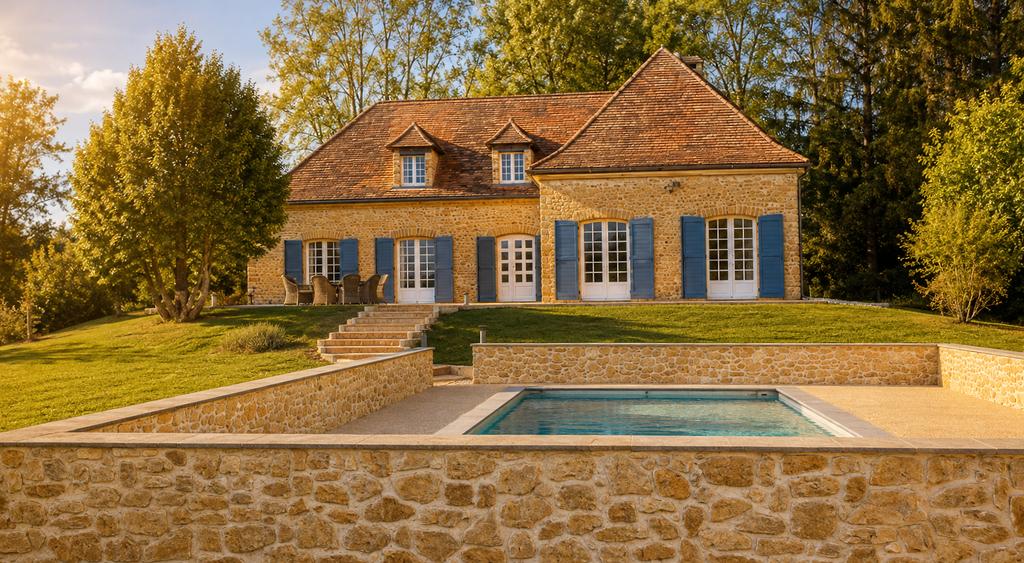
Maison Sérénité provides a private base for exploring at your own pace — whether that means one carefully planned vineyard day, village markets and restaurants, or simply bringing home a bottle you discovered and enjoying it later.
Use our local guides to plan the experiences that interest you, then return to the house and enjoy the region at your own pace.